
How an Ebola Epidemic Can Affect Mining Operations in Africa
Analysis
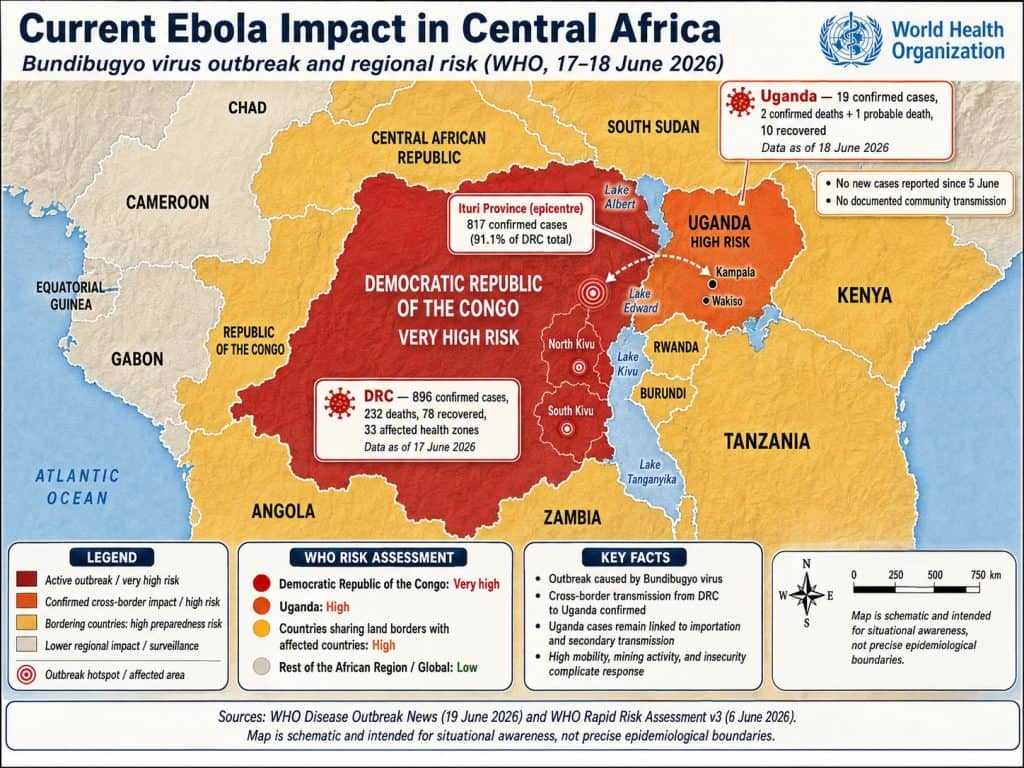
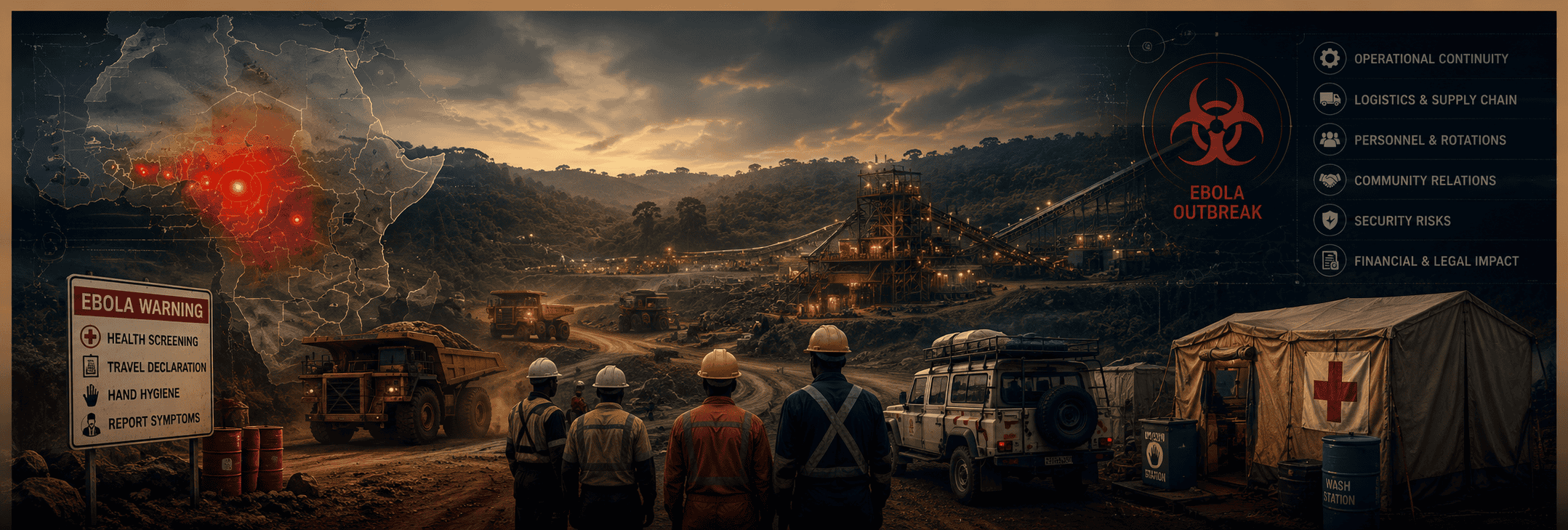
An Ebola outbreak can have a major impact on mining operations in Africa, even when there are no confirmed cases inside the mine itself.
The main problem is not always direct infection among workers. In many cases, the greatest impact comes from fear, movement restrictions, disruption of logistics, pressure on local communities, and the company’s responsibility to protect its people.
Mining operations depend on mobility: workers, contractors, transport companies, fuel suppliers, spare parts, food deliveries, medical services, security teams, and expatriate rotations. When an Ebola outbreak occurs, all of these elements can be affected very quickly.
Operational Continuity
A mine may continue operating, but under much more difficult conditions. Management may need to reduce shifts, limit access to the site, suspend non-essential work, or isolate the camp from surrounding communities.
This becomes especially sensitive when the operation depends on local workers who travel in and out every day, contractors coming from different regions, or expatriate staff rotating through airports and border crossings.
Even if the mine remains open, productivity can decrease. Delays, absenteeism, fear among workers, and stricter health controls can all slow down normal operations.
Logistics and Supply Chain
Mining sites usually depend on long and fragile supply chains. Fuel, spare parts, explosives, food, medicines, chemical reagents, and technical personnel often travel through roads, airports, ports, or borders that may be affected by health controls.
During an Ebola outbreak, checkpoints, border restrictions, transport delays, and reduced commercial movement can create serious operational problems. A mine does not need to be located inside the outbreak zone to suffer the consequences. If the supply chain crosses an affected area, the mine can still be impacted.
A delay in fuel or a critical spare part can stop production just as effectively as a direct security incident.
Personnel, Rotations, and Medical Evacuation
The management of personnel becomes one of the most sensitive issues. Expatriates may become concerned, families may put pressure on them to leave, and companies may face questions from insurers, embassies, and clients.
Rotations may become harder to manage if flights are reduced, borders are restricted, or neighbouring countries introduce entry controls. Medical evacuation can also become more complex if regional hospitals are under pressure or if receiving countries are reluctant to accept patients from affected areas.
For mining companies, this creates a clear duty of care issue. They must be able to show that they have taken reasonable and serious measures to protect their staff.
Community Relations
A mine is never completely separate from the surrounding communities. Workers often come from nearby towns and villages. Suppliers, informal workers, local authorities, security forces, health centres, and community leaders all form part of the same operating environment.
If Ebola reaches the surrounding area, fear and rumours can spread quickly. Communities may become suspicious of outsiders, medical teams, foreign companies, or government authorities. In some cases, health measures such as safe burials, isolation, or checkpoints can create tension.
For a mining company, poor communication can become a risk in itself. The company must be seen as responsible, respectful, and coordinated with health authorities, while avoiding the impression that it is imposing measures without understanding local concerns.
Security Risks
In parts of Africa, especially in areas already affected by armed groups, criminal networks, illegal mining, smuggling, or political instability, an Ebola outbreak can worsen the security environment.
Roadblocks, rumours, population movements, attacks on health teams, hostility towards checkpoints, or disruption of local authority can all affect access to the mine.
In these environments, Ebola is not only a health crisis. It can become an operational security problem.
Financial and Legal Impact
The financial impact can be significant. The company may need to increase spending on medical controls, PPE, training, isolation facilities, emergency planning, transport alternatives, security, communications, and additional stockpiles of fuel or critical supplies.
Contracts may also be affected. Companies may need to review force majeure clauses, insurance coverage, employment obligations, contractor responsibilities, evacuation arrangements, and business continuity plans.
Investors and clients may also become more cautious, particularly if the mine is located in a country already perceived as high risk.
What Mining Companies Should Do
The response should be practical, preventive, and proportionate.
A mining company should reinforce access control, introduce travel declarations, monitor workers and contractors, prepare isolation procedures, coordinate with health authorities, review medical evacuation plans, and maintain additional stocks of essential supplies.
It should also communicate clearly with employees and surrounding communities. Fear and misinformation can be as damaging as the disease itself.
The company should avoid panic, but it should not underestimate the situation. Ebola requires discipline, planning, and strong coordination between health, security, logistics, operations, and community relations teams.
Conclusion
Ebola does not automatically mean that a mine has to close. However, it can seriously weaken the mine’s ability to operate normally.
The real risk is not only medical. It is the combined effect of public health pressure, logistical disruption, community fear, security instability, staff protection, and business continuity challenges.
For mining companies operating in Africa, Ebola must therefore be treated as a strategic operational risk, not just as a health issue.