
Security Deterioration in the Central Sahel and Expansion Towards Benin
Analysis
Security Deterioration in the Central Sahel and Expansion Towards Benin
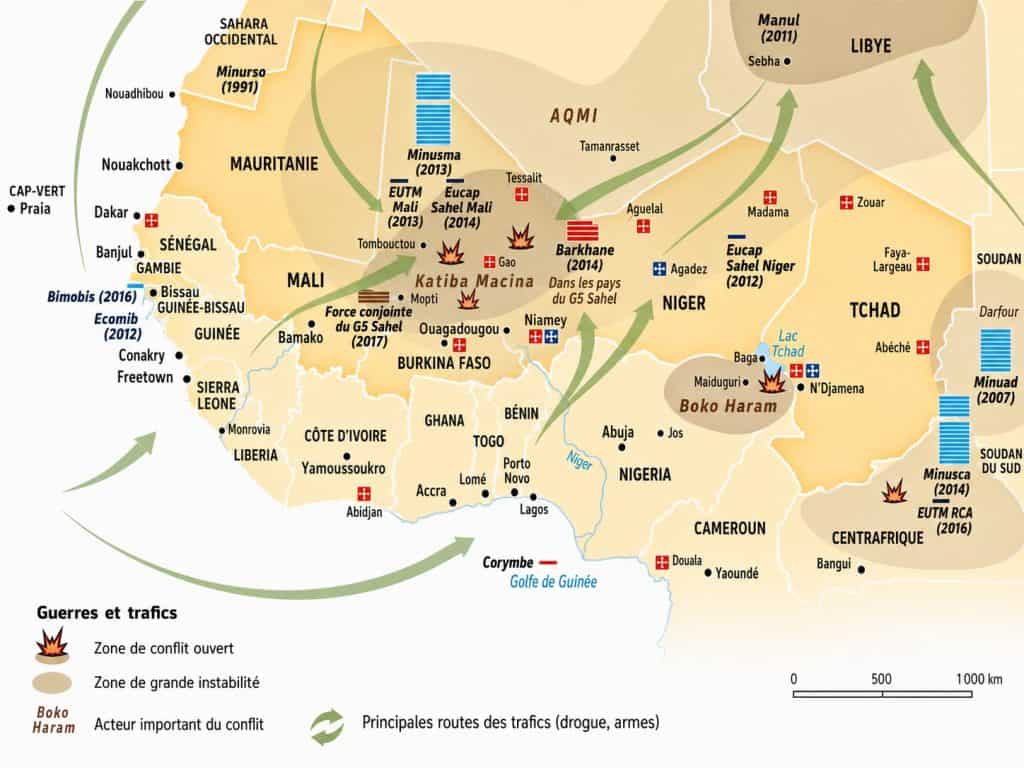
Over the last several years, the Central Sahel — particularly Mali, Burkina Faso and western Niger — has remained one of the most volatile security theatres in Africa.
Earlier regional military intelligence reporting already warned of more than 2,200 terrorist attacks in West Africa over a four-year period, with approximately 11,400 deaths, tens of thousands wounded and millions of people displaced. Since then, the situation has continued to deteriorate, with jihadist activity expanding beyond its original strongholds and increasingly affecting the borderlands between Burkina Faso, Niger, Benin, Togo and Nigeria.
The humanitarian impact has been severe. Entire rural communities have been displaced, local economies have been disrupted, and intercommunal tensions have been exacerbated. Christian communities have been among those targeted and displaced by jihadist violence, although the wider displacement crisis affects civilians from multiple ethnic and religious backgrounds.
At the West and North Africa Directors of Military Intelligence Conference held in Accra, Ghana, senior Ghanaian military officials warned that the continent was facing a broad spectrum of complex transnational threats, including illegal mining, illegal logging, kidnapping, irregular migration networks, money laundering, arms trafficking, narcotics trafficking, human trafficking, piracy and illegal fishing.
Benin’s Emerging Role
Benin has become increasingly relevant in the regional threat picture.
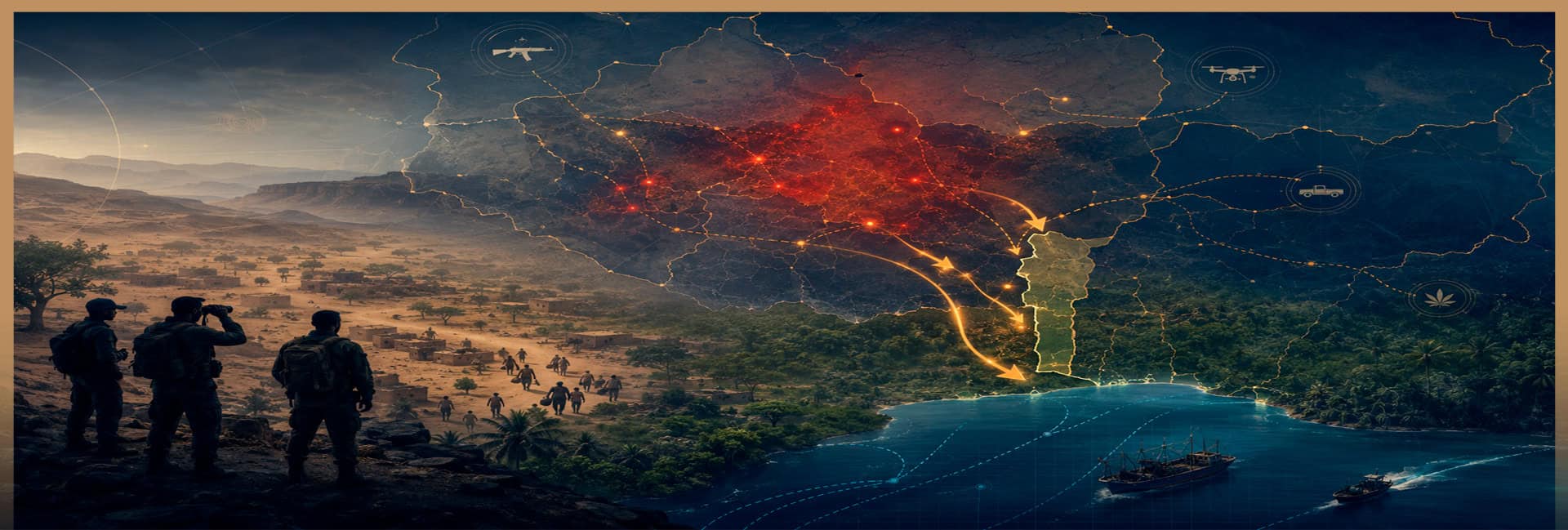
Its northern borderlands sit at the southern edge of the Sahelian conflict system, linking Burkina Faso and Niger to Nigeria and the Gulf of Guinea. This makes Benin strategically important as a potential transit, logistics and pressure corridor for armed groups, criminal networks and illicit supply chains.
Nigeria’s 2019 decision to close its land borders with Benin, Cameroon, Niger and Chad was officially presented as a measure against smuggling, particularly rice smuggling. However, some security and diplomatic assessments at the time also raised concerns about illicit cross-border flows, including the possible movement of weapons, equipment and financial resources through regional corridors.
Claims that elements within Benin’s political, military or financial structures may have facilitated support networks for insurgent groups should be treated as serious allegations requiring further corroboration. Such information should not be presented as confirmed fact unless supported by reliable, verifiable intelligence or documentary evidence.
Field-Level Warning from Burkina Faso
A senior Burkinabé military source warned that, if decisive action was not taken, parts of the Sahel, Centre-North and North regions of Burkina Faso could progressively fall outside effective state control.
According to this assessment, terrorist groups were becoming increasingly determined, better adapted to the operational environment and capable of shifting from rural insurgency to more complex forms of warfare, including attacks inside urban areas. The warning also highlighted a wider problem: the conflict could no longer be understood as a purely military challenge.
The source argued that the war had become a national resilience issue. Public disengagement, political fragmentation, institutional weakness and social division were all identified as factors that could benefit insurgent groups. The message was clear: if the population, political actors and security forces continued to treat the war as someone else’s responsibility, the country would face a much deeper strategic crisis.
Strategic Assessment
The conflict in the Central Sahel is no longer limited to terrorist attacks against military targets. It has evolved into a wider system of insecurity combining jihadist insurgency, organised crime, illicit economies, arms trafficking, intercommunal violence, population displacement and state fragility.
The expansion towards Benin and the Gulf of Guinea should be seen as part of a deliberate southward movement by armed groups seeking access to new corridors, resources, recruitment pools and logistical depth.
For this reason, the threat must be analysed not only as a military problem, but as a regional security ecosystem in which terrorism, criminal economies and political instability reinforce each other.